Frequently Asked Questions
The most-asked questions about roman mythology.
What is Roman mythology?
Roman mythology is the body of stories, beliefs, and traditions about the gods, heroes, and supernatural beings that shaped the religious and cultural life of ancient Rome. It provided a framework for understanding the natural world, human nature, and the origins of Roman society.
Who are the principal Roman gods?
The Capitoline Triad—Jupiter, Juno, and Minerva—stood at the top of the pantheon, governing the sky, marriage, and wisdom respectively. Other major figures include Mars (war), Venus (love), Neptune (the sea), Ceres (agriculture), Vulcan (the forge), Vesta (hearth), and Mercury (commerce and travel).
How does Roman mythology relate to Greek mythology?
Roman tradition absorbed a great deal from Greek culture, so many of its gods are direct counterparts of Greek ones with different names and, in some cases, distinct personalities. However, Rome also developed uniquely native figures like Janus, Faunus, and the Penates that have no Greek equivalent.
Who is the chief god in Roman mythology?
Jupiter, king of the gods and ruler of the sky and thunder, held the supreme position in the Roman pantheon. His worship was central to Roman state religion, and his temple on the Capitoline Hill was regarded as the most sacred in the city.
What is the story of Romulus and Remus?
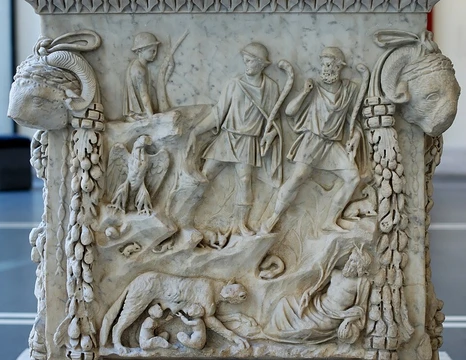
According to legend, the twin brothers Romulus and Remus, sons of Mars and a Vestal virgin, were abandoned along the Tiber and suckled by a she-wolf. Romulus eventually killed his brother and founded the city of Rome in 753 BCE, giving the city its name.
Where should a beginner start learning Roman mythology?
Virgil's Aeneid is often recommended as an entry point because it weaves together the Trojan War, the journey of Aeneas, and the founding of Rome into one sweeping narrative. For a broader survey of myths, Ovid's Metamorphoses offers a rich, chronological collection of transformation tales spanning creation to the deification of Caesar.
What is the difference between Roman and Greek gods beyond their names?
While the core narratives overlap, Roman gods often carried more civic and political weight—Jupiter was tied to Roman law and state power in ways Zeus was not. Roman religion also placed greater emphasis on ritual precision, augury, and the practical function of divine favor for the Republic and Empire.
What role did the Muses play in Roman culture?
The Muses, sometimes called the Camenae in earlier Latin tradition, were patrons of poetry, music, and the liberal arts. Roman poets like Virgil and Ovid routinely invoked them at the opening of their works, following a convention inherited from Greek practice.
What are some of the most famous myths in Roman tradition?
Beyond the Aeneid, popular stories include Cupid and Psyche (a tale of divine love and trials), the abduction of Proserpina by Pluto (explaining the seasons), and Daphne's transformation into a laurel tree to escape Apollo. These narratives were widely depicted in Roman art, mosaics, and literature.
Did Roman mythology influence later Western culture?
Absolutely—Roman mythological names and stories permeated Renaissance art, Enlightenment philosophy, and modern literature, film, and video games. The very names of the planets, the days of the week, and several chemical elements trace back to Roman and Greek mythological figures.