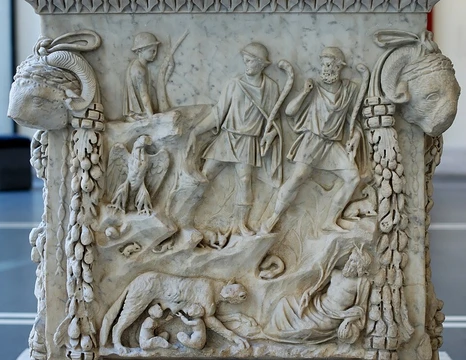
Ancile
Sacred shield of Rome, one of the pledges of rule.

Lascorz · CC BY-SA 3.0
The ancile (plural ancilia) was a sacred shield in ancient Rome. Legend held that this divine shield fell from heaven during the reign of Numa Pompilius, Rome’s second king. Because the original was considered one of the *pignora imperii*—sacred guarantees that ensured Rome’s continued sovereignty—Numa ordered eleven identical copies to be made, hoping to confuse potential thieves. The shields were housed in the Temple of Mars.
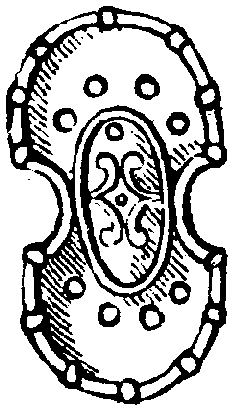
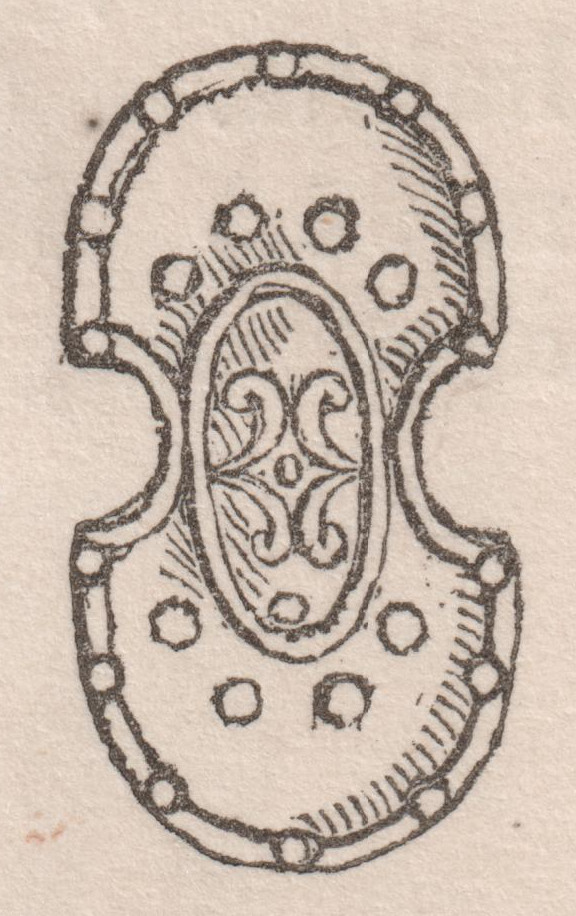
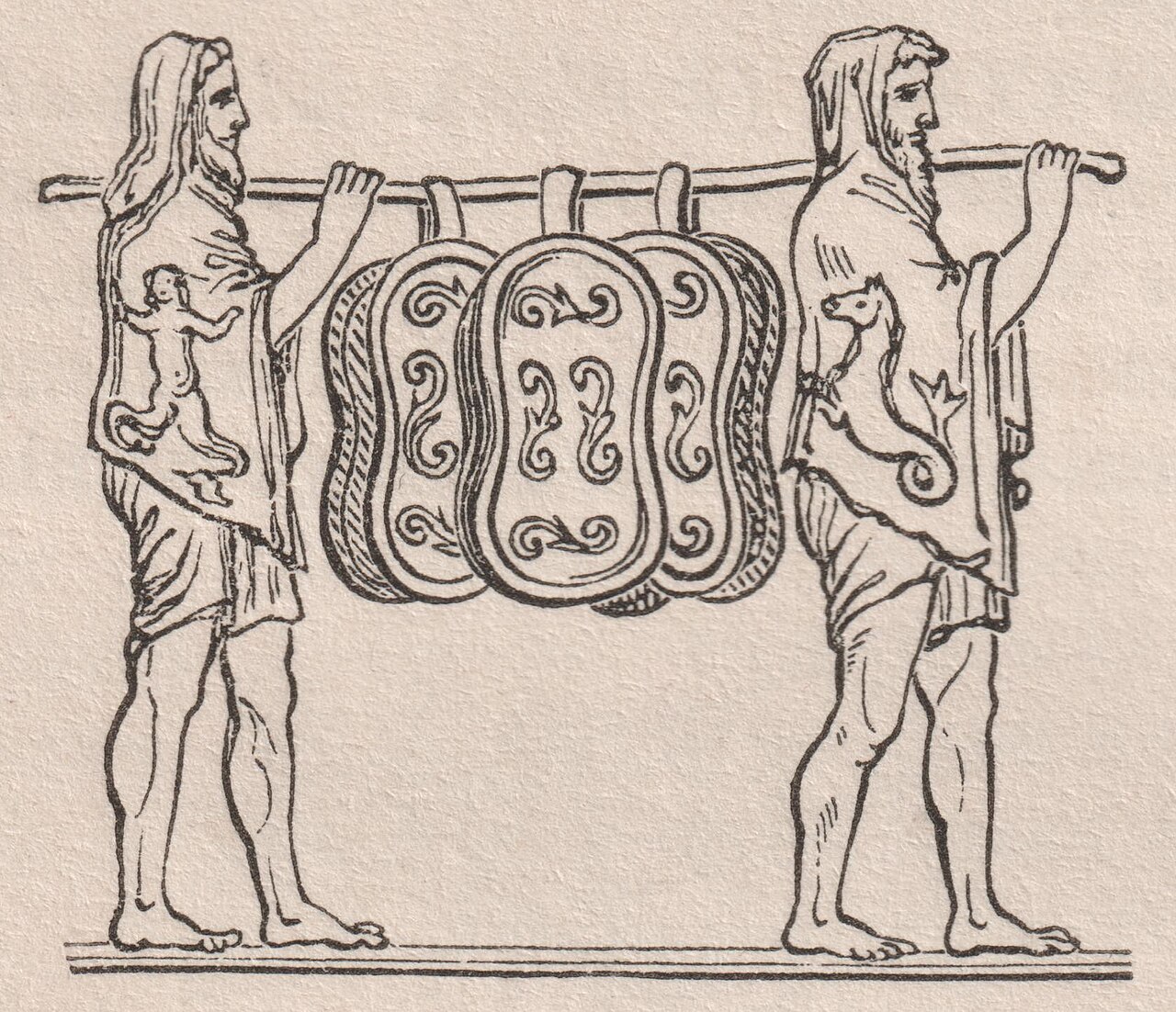
Their distinctive shape is often described as a figure of eight, a design thought to originate from Mycenaean art. According to Plutarch, the ancile was neither round nor oval but had curved indentations on both sides. The shields were entrusted to the Salii, a college of twelve priests established by Numa. During the Quinquatrus festival in March, the Salii carried the ancilia in ritual processions, beating them with staves while performing dances and singing the Carmen Salire. Varro noted that the shields may also have appeared in the Armilustrium, the “Purification of Arms,” in October.
Etymologically, ancient sources offered various explanations. Some linked the word to the Greek *ankylos* (“crooked”), while Plutarch derived it from *ankōn* (“elbow”), as the shield was carried on the elbow. Varro traced it to *ab ancisu*, meaning cut or arched on both sides, like the Thracian *peltae*.
In myth, when the original ancile fell, a voice declared that Rome would rule the world as long as the shield was preserved. It was said to have been sent by Jupiter to Numa. Acting on the advice of the nymph Egeria, Numa ordered eleven identical copies made, so that any thief—like Ulysses with the Palladium of Troy—could not identify the true shield. According to Ovid’s *Fasti*, the smith Mamurius Veturius forged the replicas on the condition that Numa grant him glory and mention him in the Carmen Salire. This story served as the etiological basis for the Cult of Mamurius, popular in the Augustan Age. The gift of the ancile is seen as a legend reflecting Numa’s successful and favorable interaction with Jupiter.
As a *pignus imperii*, the ancile was listed by the fourth-century grammarian Maurus Servius Honoratus among seven such pledges of Roman rule, alongside the stone of the Mother of the Gods, the terracotta chariot of the Veientines, the ashes of Orestes, the sceptre of Priam, the veil of Iliona, and the Palladium. Livy mentions the ancili
- type
- Sacred shield
- culture
- Ancient Rome
- associated_deity
- Jupiter
- associated_king
- Numa Pompilius
- keepers
- Salii (twelve priests)
- shape
- Figure of eight, with curved indentations on both sides
- pignora_imperii
- Listed among seven by Servius
Lore & Background
The ancile was said to have fallen from heaven during the reign of Numa Pompilius. A voice declared that Rome would be mistress of the world while the shield was preserved. Numa, by the advice of the nymph Egeria, ordered eleven identical copies to be made to confuse would-be thieves. According to Ovid’s Fasti, Mamurius Veturius forged the replicas on the condition that he be given glory and mentioned in the Carmen Salire, providing the etiological story for the Cult of Mamurius popular in the Augustan Age.
Reader's Guide
The ancile held profound significance as one of the pignora imperii, sacred objects believed to guarantee Rome's sovereignty. Maurus Servius Honoratus listed it among seven such pledges, alongside the palladium and others. The shields were ritually wielded by the Salii, a body of twelve priests instituted by Numa, in the procession of the Quinquatrus in March and possibly in the Armilustrium in October. The Salii beat the shields with staves while performing ritual dances and singing the Carmen Salire. Ancient etymologies vary: some derive ancile from the Greek ankylos ('crooked'), others from ankōn ('elbow'), and Varro from ab ancisu ('cut or arched on the two sides'). The legend of the ancile reveals a successful interaction between Numa and Jupiter, and its preservation was tied to Rome's imperial destiny.
Did You Know?
- The ancile was one of the seven pignora imperii listed by the grammarian Servius.
- The Salii, twelve priests instituted by Numa, kept and ritually wielded the ancilia.
- According to Ovid, Mamurius Veturius forged the eleven replicas of the original ancile.
- The shape of the ancile is described as having curved indentations on both sides, like a figure of eight.
The Myth of Celestial Descent
According to Roman tradition, the original ancile descended from the sky during the reign of Numa Pompilius, the second king of Rome. The shield was sent by Jupiter, and upon its arrival a voice was heard proclaiming that Rome would hold dominion over the world so long as the shield remained intact. Acting on counsel attributed to the nymph Egeria, Numa commissioned eleven perfect replicas to be forged, ensuring that no thief could identify the genuine article among the twelve—a strategy modeled on the protection of Troy's palladium against Ulysses. The smith chosen for this task was Mamurius Veturius, who agreed to craft the copies in exchange for public honor and a place in the Carmen Salire, the sacred hymn of the priestly dancers. This narrative served as the foundational myth for the Cult of Mamurius, which enjoyed particular popularity during the Augustan period. More broadly, the legend of the ancile's gift frames Numa's relationship with Jupiter as one of mutual favor and successful divine-human interaction.
Sacred Guarantors of Roman Sovereignty
The ancile occupied a unique position among Rome's most sacred objects, classified as one of the pignora imperii—literally the pledges or guarantees of imperial rule. These were objects whose continued existence was believed to ensure Rome's survival as a sovereign power. The shields were housed in the Temple of Mars, where they remained under the watch of the priestly order. In the early fourth century, the grammarian Maurus Servius Honoratus, writing his commentary on Virgil's Aeneid, enumerated the ancile among seven such pignora. The other six he listed were the stone associated with the Mother of the Gods, a terracotta chariot belonging to the Veientines, the ashes of Orestes, the sceptre of Priam, the veil of Iliona, and the palladium. Notably, Livy, in the fifth book of his history of Rome, references the ancilia but stops short of explicitly branding them a pignus imperii; he reserves that specific designation for the Palladium and the eternal flame of Vesta, suggesting that the formal taxonomy of these sacred guarantees was not entirely settled in the ancient sources.
The Ritual Life of the Salii
Day to day, the ancilia lived a life of ceremony rather than storage. Numa himself established a dedicated body of twelve priests, the Salii, whose sole purpose was to guard and ritually employ the shields. Each March, during the festival known as the Quinquatrus, the Salii processed through the city carrying the ancilia, beating them with wooden staves in time with ritual dances and chanting the Carmen Salire, a sacred hymn that also preserved the memory of Mamurius Veturius. The scholar Varro further suggested that the shields may have featured in the Armilustrium, the October ceremony of arms purification, extending their liturgical role across the Roman year. The very act of the Salii striking the shields with staves while dancing and singing transformed the ancilia from static relics into dynamic instruments of worship. In this way, the sacred objects were not merely preserved but actively performed, their presence in public ritual reinforcing the theological claim that Rome's sovereignty depended on their continued veneration.
Form, Name, and Artistic Heritage
The ancile is immediately recognizable by its distinctive figure-of-eight silhouette, a shape that ancient observers neither classified as round nor oval. Plutarch described it as a standard shield bearing curved indentations along both sides, giving it that characteristic pinched profile. Scholars have noted a possible artistic lineage linking this form to Mycenaean decorative traditions, suggesting the shape carried deep Mediterranean roots. The very name ancile has generated competing explanations across ancient sources. One tradition traces it to the Greek word ankylos, meaning crooked, a straightforward reference to the shield's curved edges. Plutarch offered an alternative, connecting the term to the Greek ankōn, meaning elbow, on the practical grounds that the shield was carried on the elbow. Varro proposed yet another derivation, from ancisu, describing the shield as cut or arched on both sides, and drew a comparison to the peltae, the lightweight bucklers associated with Thracian warriors. These varied etymologies reflect the ancile's layered identity as both a practical weapon and a sacred symbol.
Gallery

Frequently Asked Questions
What is the Ancile in Roman mythology?
The ancile was a sacred shield with a distinctive figure-of-eight shape, revered as a divine object that guaranteed Rome's sovereignty. It counted among the pignora imperii, the sacred pledges that underpinned the city's right to rule.
How did the Ancile come to Rome?
Legend says the shield fell from the sky during the reign of Numa Pompilius, Rome's second king, as a gift linked to Jupiter. It was treated as a direct offering from the heavens rather than a human-made artifact.
Why were there multiple copies of the Ancile?
Numa Pompilius had eleven identical replicas crafted so that no thief could tell which was the true original. All twelve shields were stored together in the Temple of Mars.
Who was responsible for guarding the Ancile?
Twelve priests called the Salii were charged with the care and ritual procession of the sacred shields. They carried them in ceremonial dances as part of Rome's ongoing religious observances.
Why is the Ancile important in Roman mythology?
The shield functioned as a tangible emblem of divine favor and the city's legitimate authority, making its safekeeping a matter of state security. Losing it was believed to jeopardize Rome's sovereignty itself.
More in Roman mythology 1-24
Spotted an error? Know more?
This is a living reference — every entry is fact-audited, and reader corrections feed straight into our audit queue. Suggest an edit · See this site's audit record