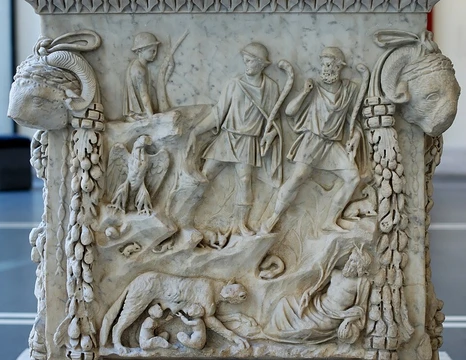
Coins for the dead
Ancient coin tradition for the dead continues at military graves.

Unknown author Unknown author or not provided · Public domain
Leaving coins for the dead is a gesture of respect or mourning. The custom dates back to classical antiquity, rooted in the belief that the deceased required coins to pay a ferryman for passage across the river Styx. Without them, the dead were thought to be stranded on the riverbank. In Virgil's *Aeneid*, unburied souls—not those lacking coins—are said to wander for 100 years. Ancient Egyptians also buried people with valuables for the afterlife, while Greeks placed a coin called Charon’s obol in the mouths of the dead.
Today, the practice is mainly observed in the United States and Canada, where visitors leave coins on the graves of former military personnel. Among U.S. service members, the denomination indicates the visitor’s relationship: a penny means someone visited; a nickel, the visitor attended boot camp with the deceased; a dime, they served together; a quarter, they were present when the person died. However, these specific meanings are a modern U.S. military tradition and are not officially recognized or uniformly practiced in Canada, where coin denominations differ. Some large cemeteries discourage the practice—Barbara Lewandowski of Arlington National Cemetery has asked visitors not to leave coins because they cause injuries during grass cutting, noting that the custom is very common there.
- origin
- Classical antiquity (ancient Greece and ancient Rome)
- associated_belief
- Dead needed coins to pay Charon to cross the river Styx
- modern_practice_location
- United States and Canada
- primary_modern_subject
- Military personnel grave markers
- coin_denominations_used
- Penny, nickel, dime, quarter (U.S. tradition; not official in Canada)
Lore & Background
The practice of leaving coins for the dead began in ancient Greece and ancient Rome. It was believed that when people died, they needed coins to pay Charon to cross the river Styx. Without coins, the dead would not be able to cross and would be stranded on the riverbank. (In Virgil's *Aeneid*, it is unburied souls, not those lacking coins, who wander for 100 years.) Ancient Egyptians followed the practice of burying people with riches for the next life, and Greeks put a coin known as Charon's obol in the mouths of deceased people.
In modern times, the practice of leaving coins for the dead has been primarily for military graves. The practice of leaving coins at military personnel grave markers is primarily both American and Canadian tradition. It is seen as a way to show respect for the person's sacrifice. Among U.S. service members, each denomination of coin signifies the level of relationship the visitor had with the dead: a penny means a person visited; a nickel means the visitor went to bootcamp with the decedent; a dime means the visitor served with the deceased; a quarter means the visitor was present when the decedent was killed. However, these specific meanings are a modern U.S. military tradition and are not officially recognized or uniformly practiced in Canada, where coin denominations do not match the described symbolism.
Some large cemeteries discourage the practice of leaving coins. Barbara Lewandowski, a spokesperson for Arlington National Cemetery, has asked visitors not to leave coins because they cause injuries during grass cutting. She noted that leaving coins at the military cemetery was very common.
Reader's Guide
The practice of leaving coins for the dead spans from classical antiquity to modern military cemeteries in the United States and Canada. Its significance lies in its continuity as a gesture of respect and remembrance, adapting from ancient beliefs about the afterlife to contemporary expressions of honor for military service. The specific meanings attached to coin denominations—penny, nickel, dime, quarter—provide a nuanced code for visitors to communicate their relationship to the deceased. However, the practice is not universally welcomed; at Arlington National Cemetery, officials discourage it due to practical hazards during maintenance. This tension between tradition and cemetery management highlights the evolving nature of mourning customs. The practice also connects to broader traditions of leaving offerings for the dead, such as Chinese burial money and joss paper, though the article does not detail those. Overall, coins for the dead illustrate how ancient rituals can persist and transform, retaining symbolic power while adapting to modern contexts.
Did You Know?
- The practice began in ancient Greece and Rome, where it was believed the dead needed coins to pay Charon to cross the river Styx.
- In Virgil's *Aeneid*, unburied souls—not those without coins—wander for 100 years.
- In modern times, a quarter left on a military grave in the U.S. means the visitor was present when the decedent was killed; this symbolism is a U.S. tradition and not official in Canada.
- Barbara Lewandowski, a spokesperson for Arlington National Cemetery, has asked visitors not to leave coins because they cause injuries during grass cutting.
Ancient Mythology and the Ferryman's Toll
The custom of placing coins for the departed traces its roots to the worldviews of ancient Greece and Rome, where the afterlife was imagined as a journey requiring payment. In that mythological framework, the soul of a newly deceased person had to cross the river Styx, and the ferryman Charon demanded a coin as the fare. Without this payment, the departed would be condemned to linger on the riverbank for a full century, unable to proceed further into the afterlife. To ensure their loved ones made safe passage, the Greeks would place a specific coin, known as Charon's obol, directly into the mouth of the deceased before burial. This ritual was not unique to the Mediterranean world. The ancient Egyptians similarly interred their dead alongside treasures and riches, operating on the assumption that the next life would require material provisions. Across these civilizations, the underlying impulse was remarkably consistent: the living felt a duty to equip the dead for whatever lay beyond death, and a small coin served as the most portable, universal form of that provision.
A Code Written in Denominations
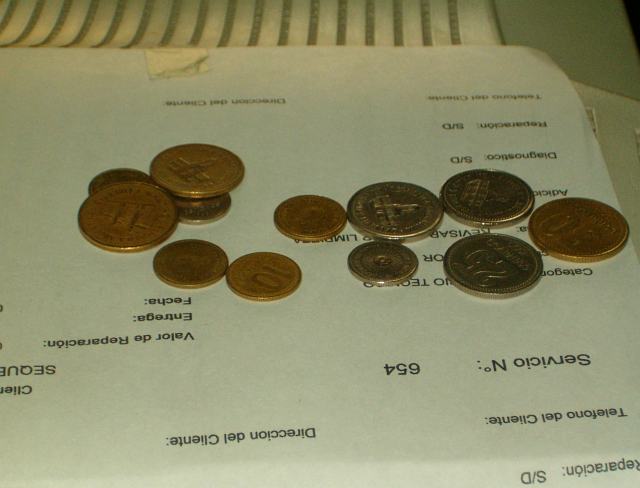
In contemporary North America, the act of leaving coins on a gravestone has evolved into a distinctly military tradition, observed primarily in the United States and Canada. Visitors place coins on the grave markers of former service members as a gesture of respect for their sacrifice, but the specific denomination chosen carries layered meaning that encodes the visitor's personal connection to the deceased. A penny, the smallest coin in circulation, simply signals that someone stopped by and paid their respects. A nickel indicates a deeper bond: the visitor attended bootcamp alongside the fallen service member. A dime reveals that the two served together in the same unit or capacity. The quarter, the largest common coin, carries the heaviest emotional weight—it means the visitor was physically present at the moment the decedent was killed. This graduated system transforms a simple act of placing metal on stone into a quiet, personal testimony, allowing strangers and close comrades alike to mark their relationship with the dead through the very size of the coin they leave behind.
When Respect Meets Maintenance
Despite its deeply personal significance, the coin-leaving tradition creates tangible logistical problems for the institutions responsible for maintaining large burial grounds. At Arlington National Cemetery, one of the most visited military cemeteries in the country, the practice is so widespread that cemetery officials have had to publicly ask visitors to refrain from leaving coins. Barbara Lewandowski, a spokesperson for the cemetery, explained that the small metal pieces scattered across the grounds pose a genuine safety hazard: they cause injuries to workers during routine grass cutting. The fact that a major national cemetery felt compelled to issue such a request underscores just how common the practice has become among visitors who come to honor fallen service members. This tension between individual expression of grief and institutional maintenance needs highlights a broader challenge faced by public spaces dedicated to the dead. The coins, meant as intimate tokens of remembrance, become collective debris that must be managed, creating an unintended conflict between the emotional needs of the living and the practical realities of groundskeeping.
A Thread Through Human Ritual
Coins for the dead occupy a distinctive place within the vast spectrum of human funerary practices, connecting ancient myth to modern commemoration through a single, tangible object. The practice is explicitly a form of respect for the dead and an expression of bereavement, yet it resonates with similar customs found across cultures and centuries. The ancient Egyptian tradition of burying the deceased alongside riches for the afterlife, the Greek custom of placing Charon's obol in the mouth of the dead, and the modern American and Canadian habit of leaving denomination-coded coins on military headstones all share a common thread: the living use small, valuable objects to bridge the gap between the world of the living and the realm of the dead. The practice also sits alongside other well-documented funerary customs, including Chinese burial money and the burning of joss paper, as well as the tradition of visitation stones. Together, these rituals illustrate a persistent human need to perform a concrete, physical act of care toward those who can no longer care for themselves.
Gallery
Frequently Asked Questions
What is the 'Coins for the dead' tradition in Roman mythology?
It is an ancient custom of placing a coin with the deceased so they could pay the ferryman for crossing the river Styx into the underworld. Without that fare, the soul was believed to be stranded on the riverbank with no way to proceed.
Who is Charon and why did the dead need a coin?
Charon was the mythological ferryman who ferried souls across the river Styx into the afterlife. The coin served as his required payment, and a soul without it simply could not make the crossing.
How did ancient Greeks and Romans actually place the coin on the dead?
Greeks would tuck a small coin, called Charon's obol, into the mouth of the deceased at burial. The wider idea of burying valuables for the afterlife also appears in ancient Egyptian funerary practice.
Where is the coin-for-the-dead tradition practiced today?
It survives mainly in the United States and Canada, most visibly on the grave markers of military personnel. Placing a coin on a headstone has become a personal gesture of respect and remembrance for the fallen.
What do the different U.S. coin denominations on a military grave mean?
In the American tradition, a penny, nickel, dime, or quarter left on a grave simply signals that a visitor stopped to pay their respects. Canada has no official denomination system attached to the practice.
More in Roman mythology 1-24
Spotted an error? Know more?
This is a living reference — every entry is fact-audited, and reader corrections feed straight into our audit queue. Suggest an edit · See this site's audit record