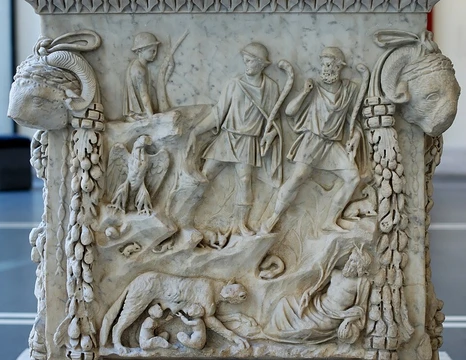
Avernus
Ancient volcanic crater believed to be the entrance to the underworld.

Wikimedia Commons · Public domain
Avernus was the ancient name for a volcanic crater in Campania, west of Naples, near the modern town of Cumae. It forms part of the Phlegraean Fields and measures about 3.2 kilometers around. Inside the crater lies Lake Avernus.
In Roman belief, Avernus was the gateway to the underworld, a role famously depicted in Virgil’s *Aeneid*. Tradition held that any bird flying over the lake would fall dead, which gave the lake its Greek name, Áornos, meaning “birdless.” This was likely due to toxic fumes released from the crater’s vents. Over time, the word “Avernus” became a synonym for the underworld itself.
On the lake’s shore are the grotto of the Cumaean Sibyl and the entrance to the Grotta di Cocceio, a tunnel about 800 meters long leading to Cumae, where her sanctuary stood. Ruins of temples to Apollo and Jupiter also remain. During the civil war between Octavian and Antony, Agrippa attempted to convert the lake into a military port called Portus Julius, digging a channel from Lake Lucrino to Avernus. The port’s remains can still be seen beneath the lake’s surface.
Avernus was also considered a divine being. The 4th–5th century writer Servius the Grammarian described a statue of Avernus that perspired during a storm after Lake Avernus and Lake Lucrino were joined, and to which expiatory sacrifices were offered.
The term “avernus” (plural “averni”) was used by ancient naturalists for lakes, grottos, and other places that poisoned the air with vapors. The Cave of Dogs in Italy was a famous example, but the most celebrated was Lake Avernus. Such places were also called “mephites.” Mephitis was the Roman goddess of noxious vapors who protected against malaria, and the adjective “mephitic” means foul-smelling or malodorous.
- Location
- Near Cumae (Cuma), Campania, west of Naples, Italy
- Circumference
- Approximately 3.2 kilometers (2.0 miles)
- Type
- Volcanic crater, part of the Phlegraean Fields
- Notable feature
- Lake Avernus (Lago d'Averno)
- Role in Roman society
- Believed to be entrance to the underworld; portrayed in Virgil's Aeneid
- Etymology
- From Greek Ἄορνος (Áornos), meaning 'birdless', due to toxic fumes
Lore & Background
Avernus was believed to be the entrance to the underworld, and is portrayed as such in the Aeneid of Virgil. According to tradition, all birds flying over the lake were destined to fall dead, hence the lake’s name was transferred to Greek as Ἄορνος (λίμνη) Áornos (límnē)‚ or 'birdless (lake)'. This was likely due to the toxic fumes that the mouths of the crater gave off into the atmosphere. In later times, the word was simply an alternative name for the underworld.
On the shores of the lake is the grotto of the Cumaean Sibyl and the entrance to a long tunnel (Grotta di Cocceio, c. 800 meters) leading toward Cumae, where her sanctuary was located. There are also the remains of temples to Apollo and Jupiter. During the civil war between Octavian and Antony, Agrippa tried to turn the lake into a military port, the Portus Julius. A waterway was dug from Lake Lucrino to Avernus to this end. The port's remains may still be seen under the lake's surface.
Avernus was also regarded as a divine being. The 4th-5th century writer Servius the Grammarian described a statue of Avernus, which perspired during the storm after the union of Lake Avernus and Lucrinus Lacus, and to which expiatory sacrifices were offered.
Reader's Guide
Avernus held significant religious and mythological importance in ancient Roman society as the believed entrance to the underworld, a concept famously depicted in Virgil's Aeneid. Its name, derived from the Greek for 'birdless', reflects the toxic fumes that were thought to kill birds flying overhead, a natural phenomenon that reinforced its ominous reputation. The site also served practical purposes: Agrippa attempted to convert Lake Avernus into a military port (Portus Julius) during the civil war between Octavian and Antony, and a tunnel connected it to the sanctuary of the Cumaean Sibyl. The presence of temples to Apollo and Jupiter indicates its role as a religious center. Additionally, the term 'avernus' was used by ancient naturalists for any place with poisonous vapors, and the Roman goddess Mephitis was associated with such noxious fumes. Avernus thus represents a convergence of myth, natural science, and military history in the ancient world.
Did You Know?
- Avernus was believed to be the entrance to the underworld and is portrayed as such in Virgil's Aeneid.
- The name 'Avernus' comes from the Greek word for 'birdless', because toxic fumes were thought to kill birds flying over the lake.
- During the civil war between Octavian and Antony, Agrippa tried to turn Lake Avernus into a military port called Portus Julius.
- The 4th-5th century writer Servius the Grammarian described a statue of Avernus that perspired during a storm and received expiatory sacrifices.
Gallery
Frequently Asked Questions
What is Avernus in Roman mythology?
Avernus is the ancient name for a volcanic crater near Cumae in Campania, which Romans regarded as the physical entrance to the underworld. It contains Lake Avernus at its center and sits within the Phlegraean Fields west of Naples.
Why was Avernus considered the gateway to the underworld?
The crater's volcanic vents released thick toxic fumes that killed birds flying overhead, creating an atmosphere the ancients associated with death and the realm of the dead. This eerie reputation cemented its identity as the threshold between the living world and the afterlife in Roman belief.
What does the name 'Avernus' mean?
The name derives from the Greek word Áornos, which translates to 'birdless.' This reflected the local tradition that any bird crossing the lake would drop dead from the poisonous gases rising out of the crater.
How does Avernus appear in Virgil's Aeneid?
In Book VI, Aeneas enters the underworld through the Avernus crater to consult the shade of his father Anchises. The lake serves as the dramatic threshold where the hero descends into the realm of the dead.
How big is the Avernus crater?
The volcanic crater measures roughly 3.2 kilometers (about 2 miles) in circumference. It is part of the larger Phlegraean Fields volcanic complex near the modern town of Cumae.
More in Roman mythology 1-24
Spotted an error? Know more?
This is a living reference — every entry is fact-audited, and reader corrections feed straight into our audit queue. Suggest an edit · See this site's audit record