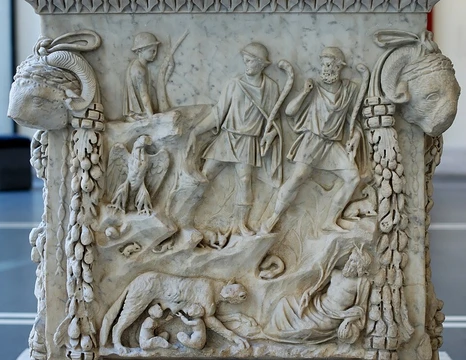
Charon's obol
Coin placed with the dead as payment for the ferryman Charon.

Kharmacher · CC0
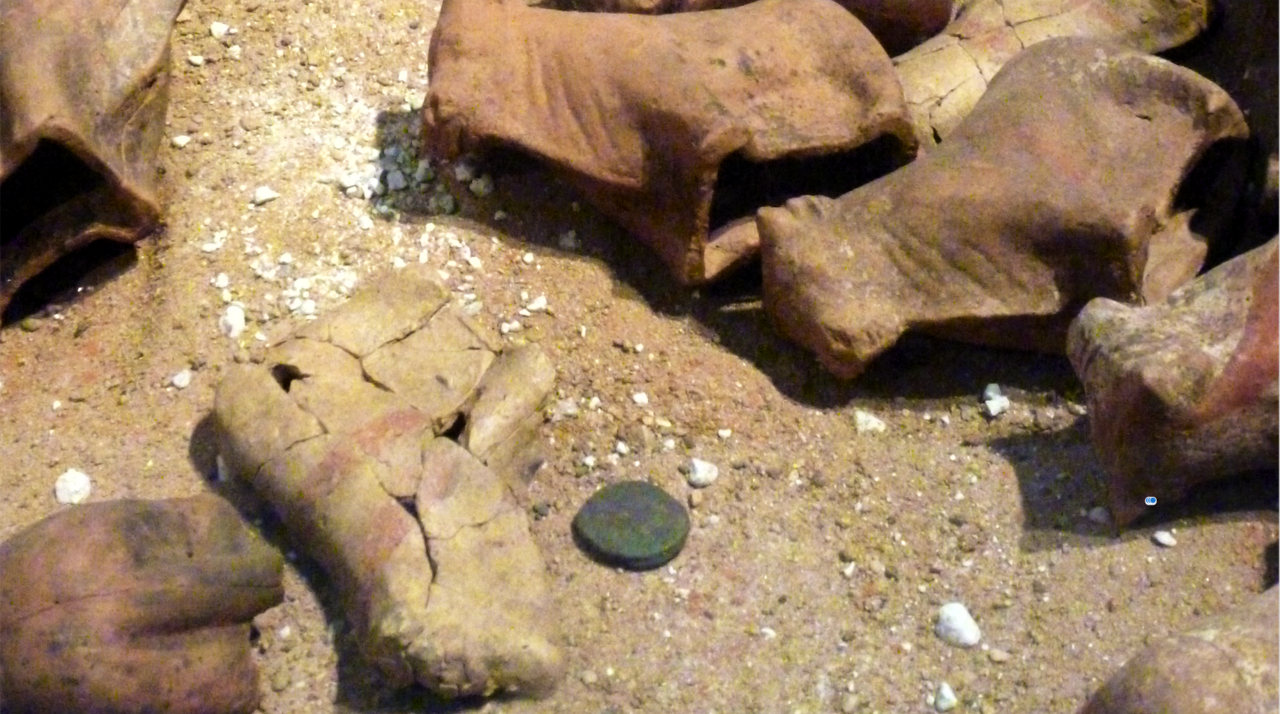
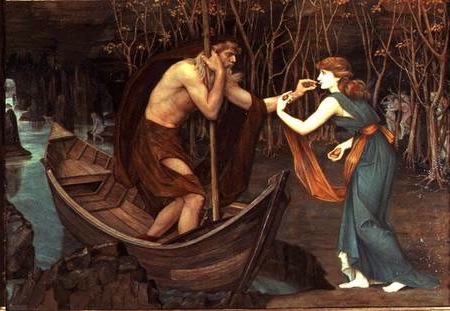
Charon's obol is an allusive term for the coin placed in or on the mouth of a dead person before burial, primarily associated with ancient Greek and Roman funerary customs. Greek and Latin literary sources specify the coin as an obol and explain it as a payment or bribe for Charon, the ferryman who conveyed souls across the river dividing the living from the dead. Archaeological examples of these coins, of various denominations in practice, have been called 'the most famous grave goods from antiquity.'
- field
- Funerary custom and ancient coinage
- known_for
- Coin placed in or on the mouth of the dead as payment for Charon
- associated_cultures
- Ancient Greeks, Romans, Near East, Celts, Germanic peoples
- typical_denomination
- Obol (Greek), danakē, bronze or copper coin (Roman)
- alternative_terms
- Viaticum, naulon, porthmeion, portorium
Lore & Background
The custom is primarily associated with the ancient Greeks and Romans, though it is also found in the ancient Near East. In Western Europe, a similar usage of coins in burials occurs in regions inhabited by Celts of the Gallo-Roman, Hispano-Roman and Romano-British cultures, and among the Germanic peoples of late antiquity and the early Christian era, with sporadic examples into the early 20th century. Although archaeology shows that the myth reflects an actual custom, the placement of coins with the dead was neither pervasive nor confined to a single coin in the deceased's mouth. In many burials, inscribed metal-leaf tablets or exonumia take the place of the coin, or gold-foil crosses during the early Christian period.
Reader's Guide
Charon's obol serves as a key example of how ancient myth and ritual intersect with material culture. The phrase, as used by archaeologists, sometimes refers to a particular religious rite but often serves as shorthand for coinage as grave goods presumed to further the deceased's passage into the afterlife. The term 'viaticum' in Latin, meaning 'sustenance for the journey,' was later adopted by ecclesiastical Latin for the Eucharist placed in the mouth of a dying person. Literary sources from the 5th century BC through the 2nd century AD consistently attribute four characteristics to Charon's obol: it is a single, low-denomination coin; it is placed in the mouth; the placement occurs at the time of death; and it represents a boat fare. The low value of the coin was often used to emphasize that death makes no distinction between rich and poor. The archaeological evidence shows a variety of practice that casts doubt on the accuracy of the term as an interpretational category, yet the phrase continues to be used to suggest the ritual or religious significance of coinage in a funerary context.
Did You Know?
- The coin is sometimes called a viaticum, Latin for 'sustenance for the journey.'
- In Greek, the coin is conventionally referred to as an obolós, worth one-sixth of a drachma.
- The satirist Lucian wrote that Charon collects 'an obol from everyone who makes the downward journey.'
- From the 6th to the 4th centuries BC in the Black Sea region, low-value coins depicting arrowheads or dolphins were used mainly as Charon's obol.
Myth Meets the Grave
The literary tradition paints a vivid picture: a single small coin tucked into the mouth of the dead, a humble fare paid to Charon so the soul could cross the river separating the living from the dead. Greek and Roman authors from the fifth century BC through the second century AD consistently describe this as a low-denomination obol placed at the moment of death. Yet the archaeological record tells a more complicated story. The practice was far from universal, and the coin was by no means always singular or limited to the mouth. In many tombs, inscribed metal-leaf tablets or exonumia substitute for the expected coin, while early Christian burials sometimes feature gold-foil crosses in its place. Germanic ship-burials present yet another variant, with entire coin-hoards suggesting a broader concept of provisioning the dead. What the sources call a simple toll becomes, in the ground, a varied and regionally diverse set of funerary customs that the myth only partially captures.
A Vocabulary for the Crossing
The language surrounding Charon's obol reveals how deeply the concept was woven into everyday economic and religious thought. Greek texts name the coin an obolós, one-sixth of a drachma, or a danakē, a small gold, silver, bronze, or copper piece in local circulation. The payment itself carries a cluster of nautical and toll-related terms: naulon for boat fare, porthmeion for a ferryman's fee, and the Latin portorium for a waterway toll. The lexicographer Hesychius of Alexandria explicitly defines naulon as the coin placed in the mouth of the dead, while the Suda encyclopedia ties danakē to the ferryman's crossing of the river Acheron. In the Black Sea region between the sixth and fourth centuries BC, low-value coins stamped with arrowheads or dolphins served a dual purpose of local exchange and functioning as Charon's obol. Even the poet Callimachus references the custom, describing the ferryman's fee carried in the parched mouths of the dead. This dense terminology shows the concept was not a marginal superstition but a recognized element of the economic and spiritual landscape.
Viaticum: From Ferry Fare to Last Rites
The Latin word viaticum, meaning provision for a journey, began as a practical term encompassing food, money, and supplies for a traveler. It also described the allowance granted to those condemned to exile and stripped of property. Cicero, in his 44 BC dialogue On Old Age, has Cato the Elder compare approaching death to nearing the end of a long voyage and the ripening of fruit that falls when ready. From this metaphorical soil, ecclesiastical Latin grew a new meaning: viaticum became the Eucharist placed in the mouth of a dying person as sustenance for the soul's passage to eternal life. The earliest literary evidence of this Christian usage appears in Paulinus's 397 AD account of Saint Ambrose's death. The seventh-century Synodus Hibernensis explained the term as the guardianship of the way, protecting the soul until it stands before Christ's judgment seat. Thomas Aquinas later described it as a prefiguration of the fruit of God in the Promised Land, a provision for the road of getting there. The Greek equivalent, ephodion, followed a parallel trajectory from something for the road to the Eucharist administered at the point of death.
Beyond the Mediterranean
While the obol is most tightly linked to Greek and Roman funerary practice, its echoes stretch far beyond the classical world. The custom appears in the ancient Near East, and in Western Europe it surfaces among Celtic communities shaped by Gallo-Roman, Hispano-Roman, and Romano-British cultures. Germanic peoples of late antiquity and the early Christian era also placed coins with their dead, and sporadic examples persist into the early twentieth century. The Germanic ship-burials, which contain not a single coin but entire hoards, suggest an analogous but expanded concept of provisioning the deceased for the afterlife. In these contexts, the coin or coin-hoard may serve a function similar to the obol—ensuring the dead's passage—yet the specific Charon myth is absent. The placement of a coin on the mouth has also been interpreted as a seal, protecting the soul or preventing its return to the world of the living. Whether understood as a religious rite or as a broader shorthand for coinage that aids the dead's journey, the practice reveals a near-universal human impulse to equip the departed for whatever lies beyond the river.
Gallery
Frequently Asked Questions
What is Charon's obol?
It is the small coin placed in or on the mouth of a deceased person before burial, serving as the fare to pay Charon for ferrying the soul across the river that separates the world of the living from the underworld. The term comes from the obol, the specific Greek silver denomination most often cited in literary sources.
Why was the coin placed specifically in the dead person's mouth?
Positioning the coin in or on the mouth likely symbolized the final payment being 'spoken' by the departed, while also keeping it securely in the grave. Ancient writers frame the act as handing over a bribe or fare so the ferryman would not refuse passage.
What denomination or type of coin was actually used?
Greek texts name the obol, and Roman practice typically called for a bronze or copper coin, though archaeologists have recovered a wide range of denominations in graves. The exact value mattered less than the symbolic act of offering payment to the ferryman.
Did only Greeks and Romans practice the coin-in-the-grave custom?
No—similar funerary coin deposits have been found among Near Eastern, Celtic, and Germanic communities, indicating the idea traveled well beyond the classical Mediterranean. The custom is sometimes called viaticum, naulon, or portorium in various ancient texts.
What happens to a soul that arrives without an obol?
According to the myth, an unpaying soul is left stranded on the riverbank, unable to cross into the afterlife. This fear of being denied passage is precisely why the custom was considered essential for a proper transition beyond death.
More in Roman mythology 1-24
Spotted an error? Know more?
This is a living reference — every entry is fact-audited, and reader corrections feed straight into our audit queue. Suggest an edit · See this site's audit record